7 Ways to Get Kids Excited for a Trip to a New Country (2026)
My six-year-old stared at the suitcase like it was a dentist’s chair. We’d just announced our family trip to Japan, and instead of the wide-eyed wonder I’d imagined, I got a scrunched nose and a flat “Do they have chicken nuggets there?” That moment taught me something most parenting books skip: excitement isn’t automatic. It’s a slow burn you have to light yourself. When you’re figuring out how to get kids excited about a trip to a new country, the real work begins weeks before the boarding pass is scanned. This isn’t about manufacturing fake hype—it’s about giving kids a tangible thread to pull, so the unknown feels less like a threat and more like a story they’re already inside. Over the last three years of international travel with our two children (now 7 and 10), we’ve tested, tweaked, and occasionally failed at seven specific strategies. The ones below are the keepers—the pre-trip rituals that turned our skeptical six-year-old into someone who now asks, “What’s the next country?” before we’ve even unpacked.
1. Turn the Destination Into a Treasure Hunt Before You Leave
The fastest way to kill a kid’s curiosity is to turn a new country into a lecture. Instead, I handed my son a black-and-white printout of Tokyo’s Yamanote train line and a green crayon. “Circle anything that looks like a loop,” I said. He traced the rail line, noticed it connected to itself, and suddenly wanted to know what was inside the circle. That was our first accidental treasure hunt, and it’s now a non-negotiable part of our pre-trip rhythm. Kids travel activities work best when they feel like spy missions, not schoolwork. For our upcoming trip to Morocco, I printed five close-up photos—a tiled fountain, a spice pile, a cat sleeping on a step, a door knocker shaped like a hand, a woven basket—and told both kids their job was to find each one in real life. No prizes, just the satisfaction of pointing and whispering, “There’s the hand!” The hunt flipped the script: instead of me narrating the country to them, they were scanning the world for clues they’d already memorized at home.
A practical step for any family: pick one public landmark (a clock tower, a statue, a specific mural) and show your child a photo of it three days before departure. Ask a single open-ended question: “Why do you think they painted a giant rabbit on that wall?” Let their guess be wrong. The point of a pre-trip scavenger hunt isn’t accuracy—it’s ownership. When we finally walked through the Jemaa el-Fna square and my daughter spotted a juice seller she’d seen in a YouTube clip, she beelined toward him like she’d found a long-lost friend. That’s the shift from “we’re dragging the kids along” to “they’re leading us somewhere.”
2. Let Them Be the Mini Tour Guide (Empowerment Over Instruction)
On our third day in Kyoto, I handed my seven-year-old a paper map with three stickers on it: the golden temple, a conveyor-belt sushi spot, and a playground near the river. “You’re the guide for the next two hours,” I said. “Get us to the first sticker.” He held the map upside down, walked us two blocks in the wrong direction, and then—without any prompting—turned it right-side up and corrected himself. That single correction was worth more than any museum audio guide. Child-led travel works because it weaponizes a kid’s natural desire for control into genuine curiosity. The rule we’ve settled on: each child gets to choose exactly one attraction or activity per destination, no veto power from parents unless it’s unsafe or logistically impossible. My daughter chose a hedgehog café in Tokyo; my son chose a trampoline park in Oslo. Both were objectively silly uses of precious travel time. Both are the first stories they tell friends back home.
For younger kids who can’t navigate yet, the guide role can be simpler: let them hold the train tickets and hand them to the conductor, or let them press the button for the correct floor in the hotel elevator. These tiny acts of agency accumulate into a feeling of “I’m part of this place,” which is the quiet engine behind all family travel tips that actually stick. One caveat: tell them upfront that being the guide also means making a wrong turn sometimes, and that’s just part of the adventure. Without that framing, a missed street can feel like a failure instead of a plot twist.
3. Pack a 'Discovery Kit' for the Plane, Train, or Car
I used to treat transit days as dead time to be survived with screens. Then I watched my daughter spend 40 minutes on a train from Oslo to Bergen drawing the inside of our compartment in a tiny spiral notebook—labeling the window, the folded table, the red seat fabric—and realized travel itself was the activity. Now we assemble what we call a Discovery Kit for every leg longer than two hours, and the rule is simple: nothing in the kit can be a toy they’ve already played with at home. A typical kit for a long flight with kids includes a blank notebook (unlined, because lines stress out early writers), a pack of colored pencils, three printed photos of things we might see out the window or at our destination, a small envelope with foreign coins or low-denomination bills, and a sticky-note pad for “secret messages.” The coins are always the breakout hit—my son once spent an hour sorting Norwegian kroner by the size of the hole in the center, a design detail he’d never encountered in American currency.
For the notebook, I give one prompt per transit segment: “Draw the weirdest thing you ate today” or “Write down three sounds you heard in the market.” These travel activities for kids work because they’re low-stakes and observational, not performative. No one’s grading the drawing of a squid skewer. I also pack a small zippered pouch with a magnifying glass and a tiny compass—two items that cost less than ten dollars total but have sparked more spontaneous exploration than any app we’ve downloaded. The compass especially: on a ferry in Greece, my daughter realized the boat’s direction didn’t match the map she’d been looking at, and that confusion led to a ten-minute conversation about wind and currents with a nearby sailor. That’s the kit’s real job—not to entertain, but to crack open small doors.
4. Use Food as a Window, Not a Battle
I won’t pretend my kids are adventurous eaters. My son’s default position on unfamiliar food is polite suspicion, and my daughter once cried over a bowl of miso soup because “the green things are looking at me.” But I’ve learned that kids trying new foods works best when you strip away the pressure and add a storyline. Before our trip to Mexico City, we watched a short video about a family making tortillas by hand in a small village. My son was fixated on the sound of the corn grinding. When we arrived and a street vendor handed him a fresh taco, he didn’t see a foreign object—he saw the end of a story he’d already started at home. That’s the frame shift: food isn’t a forkful of risk; it’s a clue about how people live.
A practical rule we use: one “adventure food” per meal, always paired with a safety-net option we know they’ll eat. The adventure food doesn’t have to be finished—touching it, smelling it, or licking it counts as a win. We also play a game called “Ingredient Detective,” where the kid has to guess one ingredient in a dish. Last week in a Marrakech food stall, my daughter correctly identified cinnamon in a lamb tagine, and the cook gave her a thumbs-up from across the counter. That tiny moment of recognition—being seen by a local—cemented her willingness to try the next strange thing far more than any parental cheerleading. For cultural food experiences for kids, the goal isn’t a clean plate; it’s a single moment of genuine curiosity, and that’s a much lower bar.
5. Create a Simple 'Adventure Journal' Tradition
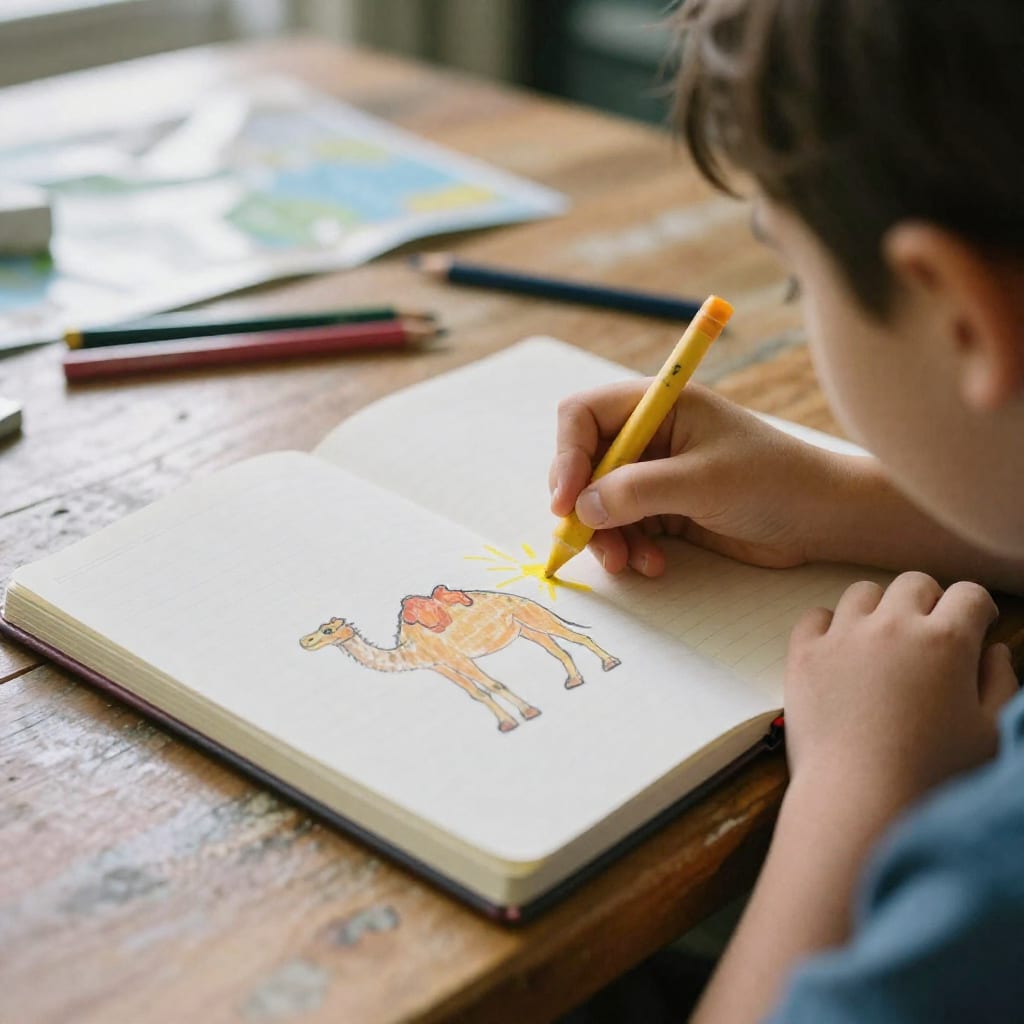
We started the journal tradition by accident. On a rainy afternoon in Bergen, stuck inside a rental apartment, I handed both kids a blank sketchbook and said, “Draw one funny thing you saw today.” My son drew a seagull stealing a man’s ice cream. My daughter drew the man’s face. Side by side, those two drawings told a better story than any photo we’d taken that day. Now, every trip gets its own dedicated journal—nothing fancy, just a thin A5 notebook with a cardboard cover—and the only rule is one entry per day, no minimum word count, no requirement to write at all. A kids travel journal that forces sentences kills the impulse; a journal that accepts a scribble, a sticker, or a pressed leaf keeps the door open.
For pre-trip excitement, we start the journal two weeks before departure with a single prompt: “Draw one thing you think you’ll see.” My daughter drew a pink castle for our Scotland trip—a castle that didn’t exist, but her search for it made her scan every hillside with binoculars. The journal also becomes a quiet anchor on overstimulating days. When a morning of sightseeing leaves everyone frayed, I’ll pull out the journals and a pack of colored pencils and just say, “Let’s catch up on yesterday.” The act of remembering a funny moment or a weird bug recalibrates the whole mood. These family travel memory keeping rituals don’t need to be beautiful; they just need to be consistent.
6. Give Them a 'Yes Day' Within the Trip
I used to plan our itineraries like a military campaign—every hour accounted for, every museum pre-booked. The turning point came in Lisbon when my son, exhausted from three straight days of cathedrals and tile museums, spotted a tiny playground shaped like a wooden ship and asked if we could stop. I said no because we had a timed entry to a viewpoint. He shut down for the rest of the afternoon, and the viewpoint was fogged in anyway. The next trip, I built in one unplanned day where the kids made every call. They chose a park with a weird sculpture garden, a gelato stop, and an hour of throwing rocks into a fountain. That day cost us nothing and generated more genuine laughter than any ticketed attraction. A kid-friendly travel itinerary needs slack—not just as a buffer against meltdowns, but as a signal that their desires matter.
The Yes Day rule is simple: the child picks three activities (from a parent-curated list of six to eight options, to avoid the “trampoline park in every country” trap), and parents cannot say no unless it’s unsafe, closed, or genuinely unaffordable. The curated list usually includes one nature option (a park, a beach, a garden), one food option (a specific snack they want to try again), and one “wild card” (a souvenir shop, a fountain, a street performer they want to watch longer). This structure keeps the day from veering into chaos while still feeling radically open to a kid used to being told “we have to go now.” The side effect I didn’t expect: on our Yes Day in Marrakech, my daughter chose to return to the spice shop we’d visited three days earlier because she wanted to smell the cinnamon again. That repeat visit—her idea, her pace—became the emotional core of the whole trip.
7. Connect Before You Go: Books, Movies & Music From the Destination
Three weeks before our Japan trip, I put on a Studio Ghibli film with no English subtitles. My kids, then 5 and 8, didn’t understand a single word of dialogue, but they were riveted by the animation style, the food, the sliding doors, the way characters bowed. When we arrived in Tokyo and they saw a real sliding paper door at a ryokan, my son whispered, “It’s like the movie.” That moment of recognition—the bridge between a fictional world and a real one—is the entire point of pre-trip media. Books to prepare kids for travel don’t need to be educational in a heavy-handed way; they just need to make the destination feel like a place where stories happen. For Morocco, we read “The Storyteller of Marrakech” and listened to a Gnawa music playlist on repeat during breakfast. By the time we landed, the sound of the guembri felt familiar, not foreign.
For younger kids, I focus on picture books with detailed illustrations of daily life—a market scene, a schoolyard, a kitchen. Point out one specific detail (“Look, they take their shoes off inside”) and let that be the hook. For older kids, I’ll find a local animated film or a documentary clip about a festival. The goal isn’t to pre-teach the culture; it’s to give them one or two touchpoints that make the real thing feel like a sequel, not a cold open. One surprising hit: we found a YouTube video of a Thai street-food vendor making roti, filmed from the counter level so the viewer sees the dough stretching at eye height. My daughter watched it four times. When we stood in front of that exact stall in Bangkok, she ordered in Thai-accented English because she’d heard the exchange on the video. That’s the power of multicultural learning for children when it’s delivered through sensory media, not flashcards.
What If the Excitement Still Doesn’t Click?
Some kids won’t show a flicker of interest until the plane touches down, and that’s fine. Our strategies aren’t a checklist to be graded—they’re an invitation, not a demand. The real shift happens when a child realizes the new country isn’t something happening to them, but something they’re helping to shape. That might take three days or three trips. The treasure hunt, the guide role, the discovery kit, the food games, the journal, the Yes Day, the movies—these are all just different doorways into the same room. You only need one to work.
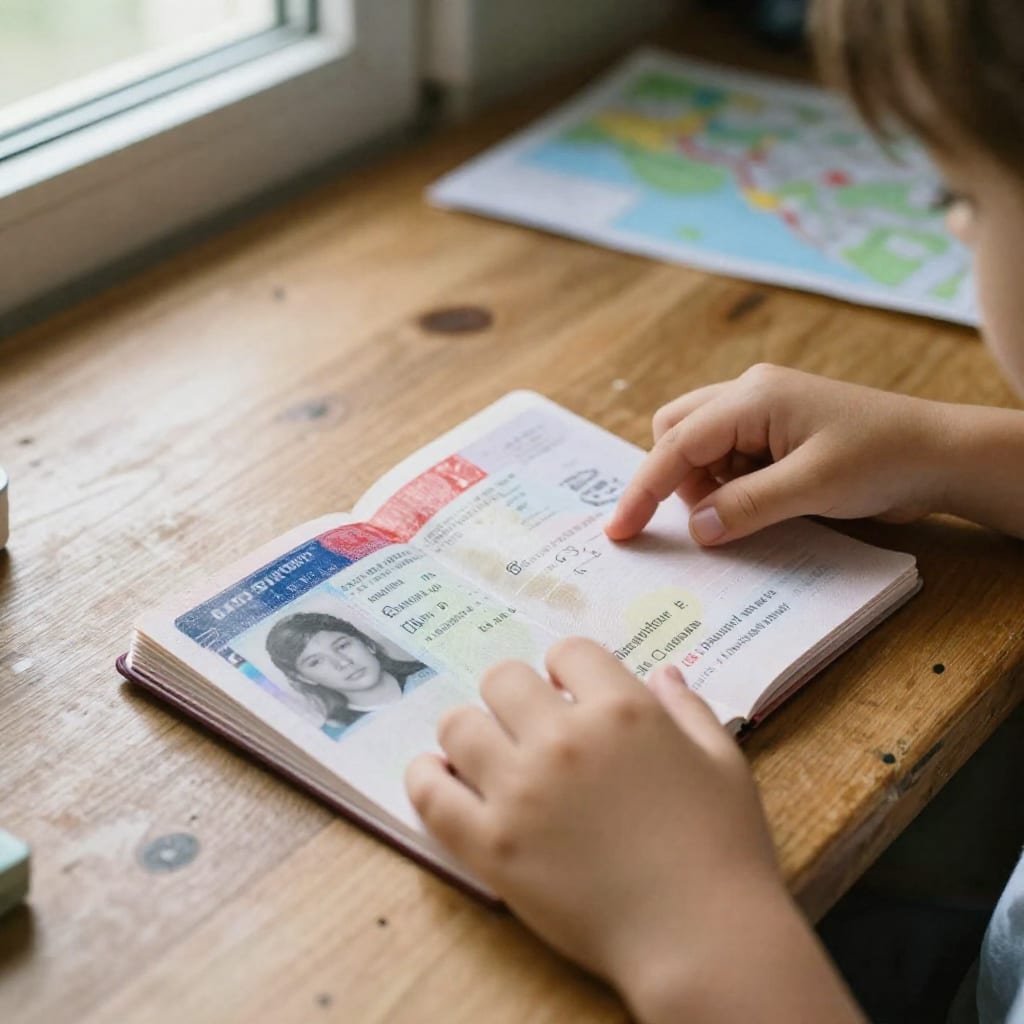
One final piece of advice I wish I’d heard earlier: let your own excitement be visible and a little messy. When I stopped performing the role of “calm, knowledgeable tour guide” and let my kids see me get genuinely lost, frustrated by a ticket machine, or giddy over a perfect bowl of noodles, they mirrored that emotional range. Excitement is contagious, but only when it’s real. The 2026 version of family travel isn’t about perfectly curated Instagram moments—it’s about letting the trip be a shared project, with all the wrong turns and weird snacks that implies. Worth bookmarking before your next trip, especially if your kid currently thinks a passport is just a boring blue booklet.
Frequently Asked Questions
What if my child is too young (under 5) to understand maps or planning?
Focus on sensory prep: show them bright photos of things they'll see (animals, trains, colors), read simple board books about the country, and use stuffed animals as 'travel buddies' to role-play the journey. A favorite teddy bear with its own tiny backpack can make the whole concept of travel tangible.
How do I avoid overhyping the trip so they aren't disappointed?
Balance excitement with reality: mention that some days will include waiting or walking, and frame those moments as part of the adventure (e.g., "we'll play I-spy in the airport line"). Honest previews build resilience; overpromising builds resentment.
My kid is a picky eater—how do I handle local food without a meltdown?
Pack familiar snacks as a safety net, introduce one 'adventure food' per meal, and let them choose from a photo menu. Never force—just celebrate curiosity, even if it's just touching or smelling the food. A single bite is a bonus, not a requirement.
What if they get bored or homesick mid-trip?
Build in 'downtime days' with no plans, bring a familiar comfort item (e.g., a small blanket or toy), and use video calls home sparingly to avoid amplifying homesickness. Sometimes an hour in a playground with local kids does more for morale than any sightseeing.
How much should I involve them in actual planning vs. just surprising them?
For kids 6+, give one or two real choices (e.g., choose a museum or a park from three options). For younger kids, surprise works better, but still use countdown calendars and stories to build anticipation. The key is an age-appropriate sense of agency, not a full democratic vote.